As businesses generate and transfer more data than ever before, traditional copper-based networks are reaching their limitations. Fiber optic technology has emerged as the preferred solution for modern communication systems.
What Makes Fiber Optics Different?
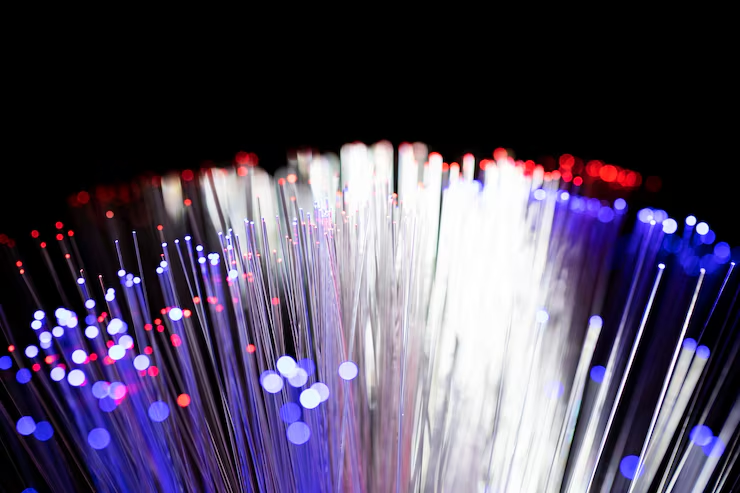
Unlike copper cables that transmit electrical signals, fiber optic cables use light signals to transfer data at extremely high speeds.
Key Advantages
Faster Speeds
Fiber networks support significantly higher bandwidth compared to traditional cabling.
Longer Distances
Signals can travel much greater distances without degradation.
Enhanced Reliability
Fiber optics are immune to electromagnetic interference and environmental disturbances.
Future Readiness
Emerging technologies such as cloud computing, IoT, and AI require high-capacity infrastructure that fiber networks provide.
Applications
- Data Centers
- Enterprise Networks
- Telecommunications
- Industrial Facilities
- Smart Cities
Conclusion
Fiber optic infrastructure is no longer optional for organizations seeking long-term growth. It provides the speed, reliability, and scalability required for today’s digital economy.